Decoding Advertising Lecture NotesSignifier (Initial Stimulus) + Signified (Mind’s representation) = Denotative Sign, + connotative signifier Words & Images have different levels of reading:
“Ads ask us to participate in ideological ways of seeing ourselves and the world.” Ads are particular to time & place and reflect current political ideals/ social ideas/ cultural trends. Ads function within their context. Ads reinforce particular cultural myths which are often presented as “natural” but represent a cultural norm or dominant ideology. There’s a reinforcing agenda surrounding advertisements. Moral values – cultural norms and behaviour. Desirable traits are depicted as popular and normal within advertisements. Representation of gender, class, & ethnicity. Consumerism & Status – ideas that are reinforced as good for individuals. Constant competition for status amongst peers: buy status by consuming desirable products. Aspirational selling:
Advertising business
Magazine ads
Semiotic decoding: Separate image and text Linguistic message
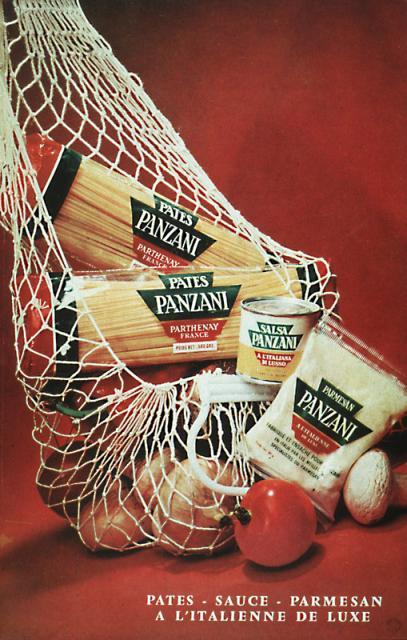
Decoding Advertisements Task - Panzani
Image message A variety of fresh goods in a string bag, accompanied with the branded products spilling out of a string bag.
The text refers to Italy directly, and the pseudo-Italian brand name alludes to Italian origins. This message is reinforced by the Italian colour scheme. Primarily image-specific, elements of convergent anchorage, text compliments the primary image message. Frame of reference 1960’s French magazine, Sunday issue. Reinforces a perception of an Italian stereotype. Decoding Advertisements Task - Joy By Dior
Image meaning Youthful woman wearing a jewelled necklace backlit by sunlight submerged to her shoulders in water. Superimposed image of product in the bottom right of the image.
Convergent anchorage – the text connects the image content to the message Frame of reference The weekend guardian magazine, February 2019. Doubtless other magazines with a primarily female demographic. Decoding Advertisements Task - Burger King Linguistic Meaning
Non-Coded Reading:
Non-Coded Reading:
Printed Advertisement campaign launched in 2017.
0 Comments
Reading Words & Images Lecture Notes
The Treachery Of Images Task
Semiotic analysis – 30 minutes exploring:
The text message of the piece “Ceci n’est pas une pipe.”, hand-written (& the artist’s signature), “This is not a pipe.” A literal statement, punctuated with a period which could have easily been omitted. The text alone is a short and simple statement of fact that would suggest that whatever it is accompanied by is not a pipe.
The image itself is a realistic rendering of a pipe (in oil paint). The pipe itself has light & shadow cast upon it [Denotation], suggesting that it exists within a three-dimensional reality, imitating that of our own [Connotation]. However, the pipe is suspended alone in a formless beige space which may bring into question its authenticity as a real object. It is the only image within this work. Combined, the image and the text are, in a literal sense, in direct contradiction with each other. The image is clearly a pipe, yet the text states in no uncertain terms that “This is not a pipe.”. If one looks beyond the literal denotations of each element, one may read that since this piece of work is a painting of a pipe, and not a pipe itself, the text is correct. The text invites this line of questioning from the viewer, as a literal interpretation results in a paradox & one must seek alternate interpretations to resolve the paradoxical reality presented. Convergent anchorage: The text and image lose their meaning without each other, but when combined they pull the audience into the premise behind this particular piece of work.
The film the Da Vinci Code (2006) was the first thing that came to my mind upon reading that the topic of this lecture would be semiotics.
The film has examples of the exploration of semiotics throughout. By viewing, contemporarily mundane symbology in the setting through different lenses, those of a different historical context and cultural interpretations, the protagonist is able to read & understand more of the world presented to them compared to other characters.
Semiotics Lecture Notes
Semiotics – Study & examinations of signs & symbols. Context affects connotations & interpretations. Signs & sign-systems within society.
Semiotics linked with structuralism.
Signs can be assembled together to form codes, connotations that can be inferred when signs are connected. Semiotics can be used as a system to read the world around us & understand the core aspects of meanings. Origins of semiotics lies with linguistic studies, trying to understand language as it stands at any one point in time. Ferdinand Saussure (1857 - 1913), Charles Pierce (1839 - 1914).
Language is the vehicle for which the brain expresses its experiences. Language carries an inherent ideology, as it develops throughout time alongside cultural ideals. The exchange of ideas is facilitated through language. Written language is full of signs, words, signs are arbitrary and irrelevant from the subject they represent. Signs function because they are different from others.
Myth reflects a cultural perception of signs. Barthes influenced by Karl Marx. Communism, demonstrably, the most dangerous ideology present in the modern world. Barthes writes about Parisian wrestling as a vehicle to discuss semiotics. Break Questions
How is the role/ character of each wrestler defined and communicated to the audience?
The commentator introduces them describing their physical power through height and weight statistics, prior knowledge of them is inferred by the experienced audience reaction (booing for the Giant Haystacks, cheering for the Big Daddy) audio queues of celebratory trumpets bolster the introduction of Big Daddy. Body language of the wrestlers themselves as they are introduced conveys their disposition, Giant Haystacks steps out into the ring and merely makes his presence know by raising his arms, whereas Big Daddy saunters around the ring appealing to the crowd with his boisterous movements. What is the role played by the commentator? The commentator describes events of note within the ring, and prescribes a tone to current events with their reaction to events and rhetorical questions building tension around the action. What about the role of the referee? The referee enforces the pre-determined rule-set on the match, providing the framework for which the action may take place within. The referee also provides a visual comparison of a normal man contrasting against the titans in the ring. The referee’s actions can be theatrical in nature, as he contends to negotiate control over the giants in the ring. The presence of the referee represents control of the match & fair play, when he is absent from the action, anything goes. The referee is as much a performer as the wrestlers themselves. Crowd response is the action in the ring clear to follow? If so how is this made possible? The general tone of the action in the ring is clear to follow, some specific incidents may be somewhat obscured from the audience unintentionally. The commentator leads the audience through the action. Exaggerated gestures from the wrestlers and referee add clarity to the action. Based on observation would you classify wrestling as a sport? It’s theatre, a performance. Sport, as I interpret it, is a competition between athletes pushing themselves to their absolute limits to succeed within the parameters of an event, wrestling just does not have the authentic competitive nature of a true sport. Wrestling has all the trappings of a sport, but wrestling is not a sport, it is a performance. Wrestling sells the appearance of passion without the true motivation or consequences of real passion. Roland Barthes' Mythologies Notes
Barthes describes wrestling as an open-air spectacle, this inspires the idea of romantic freedom, and accessibility. A form of entertainment for the common people.
The idea that wrestling is a sport is quickly dismissed in favour of the view that wrestling is a performance, a form of theater. However Barthes does address some wrestling that is done in a sporting context, true wrestling, an actual physical competition with victory being the primary motivator of the wrestlers involved. The audience's awareness of the true authenticity of the fight is declared as irrelevant, as they are only concerned in the shallow perception of the contest within the ring. Spectators view wrestling for the spectacle of action, as long as the show is good the suspension of disbelief remains. Exaggerated gestures and a clear framework, or language, of how the wrestling bout occurs helps the audience members understand the narrative being performed. Wrestlers are presented as avatars of morality, and such alignments are made obvious from the moment a wrestler enters the ring, their actions, their gestures, even their attire paint a character that each wrestler plays upon the stage. Barthes discusses the concept of the Salaud, the "bastard", or in modern wrestling terminology, the Heel. The salaud plays into their role to make the crowd despise them, creating a passionate investment in the wrestling bout. The salaud's character is built of established cultural stereotypes, the cultural language is exploited, so that the audience recognises that they should despise the salaud. Gestures are exaggerated and embraced by the wrestlers, a clear display of unbridled passion in each action creates a compelling performance to invest the audience. Wrestling is used as a vehicle for audiences to vicariously play out a battle between good and evil, to grapple with the struggle of morality through the performance afforded to them by the wrestlers. The BriefTo provide an appropriate conceptual illustration to fit a given article. The article for my project is Videogames have replaced music as the most important aspect of youth culture an opinion piece published by the Guardian. The parameters of my illustration are: One illustration measuring 125mm high by 85mm wide, in a CYMK colour format One animated illustration to be featured online (which is to be an animated version of the initial illustration), in an RGB colour format. Out of all the articles on offer, I believe this is the one I have the most innate understanding on. My childhood was at a key point in this transition. I remember listening to cassette tapes & CDs on barely portable bulky players & clunky two-in-one cassette/ CD boom-boxes, then transitioning into video games as my primary source of entertainment. Research & InspirationVideo Game Symbols & Visual Language
Music Symbols & Visual Language
Initial Thumbnail IdeasAs my article is about music being replaced by video games as the prime spot in cultural influence, my initial ideas try to combine aspects of the two, showing video games in the spotlight, or music fading away.  Video games have a certain visual code associated with them. Very early on I decided to capitalise on a historical video game aesthetic: pixel-art. I concluded that appealing to the more retro aspects of video game culture would resonate with the demographic of the guardian more than modern video games, there's more historical ground to base my illustration on this way. Stereotypes become more defined over time, so a wider demographic will recognise certain visual language reliably if there's a precedent behind it. Developed ThumbnailsThe thumbnails I decided to explore further were the ones with the most retro video game appeal.  Classic, long lived, video game character Link (The Legend of Zelda 1986 - Current), smashing a guitar represents video games destroying music culturally through direct metaphorical representations of each industry. 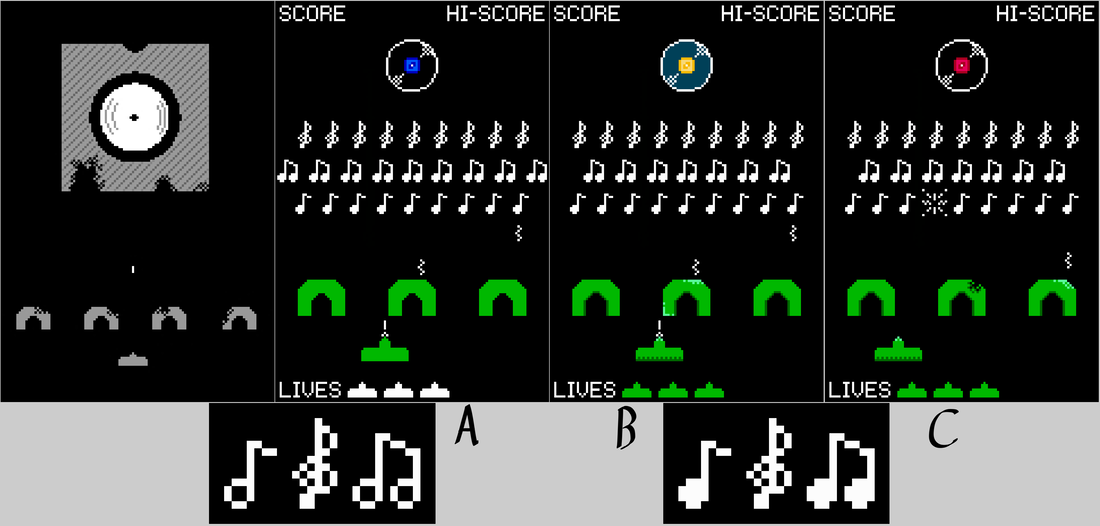 Retro arcade game Space Invaders (1978) re-skinned to replace the traditional enemies into musical icons. The trappings of video game U.I. (user interface) elements provide a recognisable visual alongside the alternative content of musical icons. The frame becomes quite busy without communicating much. The simple assets lend themselves to animation. 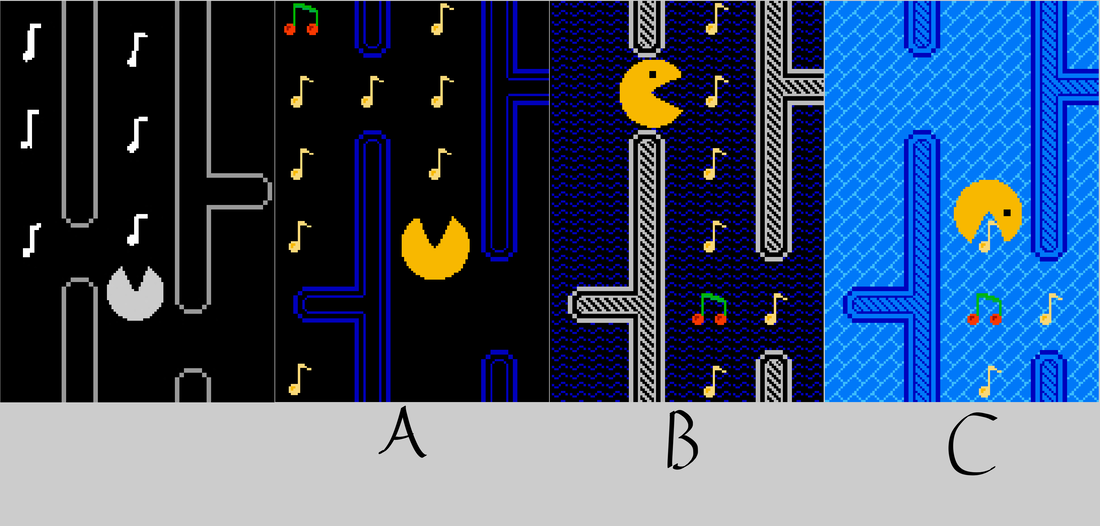 Another retro arcade game, Pac-Man (1980) reskinned to replace the typical pellets with musical notes, I'm very happy with the cherry reskin. The frame limits what's possible with this idea I believe, but the simple assets would make animation easy. Finalised Idea Development & ProductionLink smashing a guitar. Visually the most interesting, and technically the most challenging to animate.
Outcomes
 Contextual Web Article Mock-Up |
Author:Elliot Watson, Illustrator with a background in historical swordsmanship and all the weird and wonderful trappings that entails. Archives
November 2021
Categories |



 RSS Feed